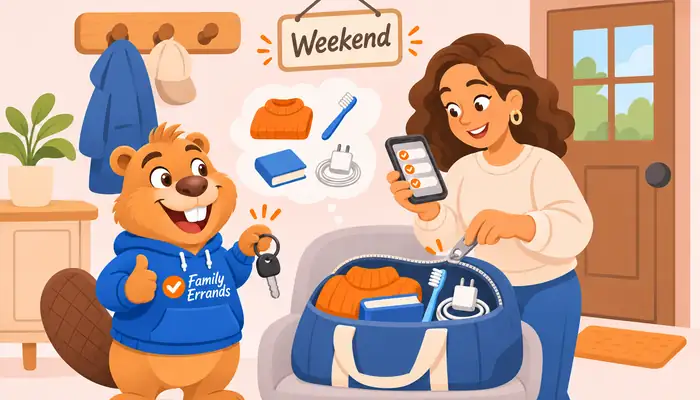
What the mental load actually is
Doing the shopping is a task. Knowing that the washing-up liquid will run out on Thursday, that a cousin's birthday is in ten days and nobody has a present yet, and that the car insurance renews next month — that's the mental load. It is invisible from the outside, it doesn't stop when the work is done, and it rarely appears on anyone's list of chores.
That's why two people can both feel they do a lot at home and still feel things are uneven: one of them is doing the jobs, the other is also carrying the reminders.

Everyday examples
Most households will recognise a few of these:
- Noticing that bin bags, nappies or coffee are running low before they run out
- Remembering which week the bins go out and when the bed sheets were last changed
- Keeping track of school forms, after-school activities and pickup times
- Booking doctor, dentist and vet appointments — and remembering they're coming up
- Birthdays on both sides of the family: the date, the present, the card
- Knowing when the rent, the meter readings and the boiler service are due
- Writing the shopping list in the family chat, then reposting it when it gets buried
How to talk about it with your partner
A calm conversation helps more than a big one. A few things that make it easier:
- Pick a quiet moment. Not in the middle of a busy evening or right after something was forgotten.
- Use concrete examples. “This week I kept track of the dentist, the school trip money and the birthday present” says more than “I do everything”.
- Write it down together. Spend a week listing everything you each keep in your head. Most people are surprised by the length of the list — including the person who writes it.
- Ask about their side too. Your partner probably carries things you don't see: the car, the paperwork, a parent's appointments.
- Agree on whole areas, not single jobs. Sharing works well when one person takes an area from start to finish — noticing, planning and doing — rather than waiting for instructions.
- Check in again. One talk rarely settles it; a short chat every few weeks keeps it fair as life changes.
If you'd like a ready-made starting list, see our list of household chores for couples.
Move the mental load into a shared list
Talking helps, but the reminders still have to live somewhere. As long as they live in one person's memory, that person keeps carrying them. In Family Errands, everything you used to remember alone becomes an errand that both of you can see and edit — and you are equal participants, so there's no boss and nobody checking up on anyone.
Empty your head into errands
Add each thing you keep track of as an errand: “Book the dentist”, “Renew car insurance”, “School trip money”. If you already have a list in a chat or a note, copy it — the app offers to create a new errand from the copied text, with each line as a separate checklist item.
Share them with your partner
Tap your partner's avatar on the errand. From then on you both see it, and either of you can edit it or tick it off.
Let repeating jobs come back on their own
Bins every Tuesday evening, bed sheets every two weeks, rent on the last day of the month — set the repeat once, and nobody has to remember it again.
Each set your own reminders
The errand's time is the same for both of you, but each person picks their own reminders: one an hour before, the other ten minutes before.
Hand an errand over completely
When your partner takes something on, hand the errand over to them: it becomes theirs and leaves your list, so you can genuinely stop thinking about it.
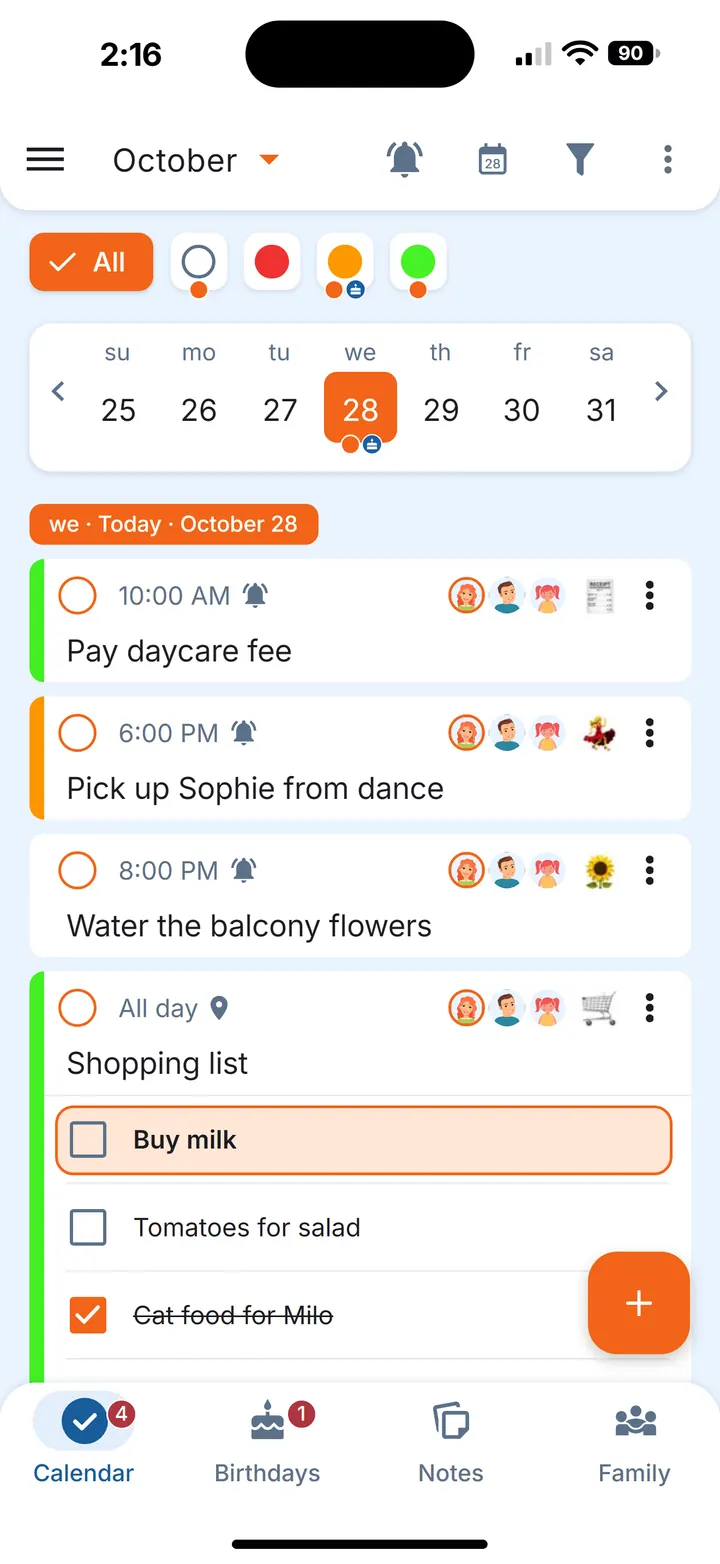
When something is shared with or handed to your partner, they can mark that they've seen it, so you know it arrived. It confirms that the message got through — not a progress report.
Small habits that keep it light
- Things that run out. For dishwasher tablets, water filters or contact lenses, switch on stock tracking and the low-stock reminder in a repeating errand: the app reminds you when only a few are left, so noticing isn't one person's job.
- Undated jobs that mustn't slip. “Fix the wardrobe door” can be an errand with no date: it's shown every day until it's completed, for both of you.
- Gift ideas in one place. Add birthdays with a list of gift ideas and share the record, so both of you know what's planned and nobody buys the same present twice.
- Kids' logistics. School pickups and lessons as repeating errands shared with both parents, each with their own reminder time.
- The weekly shop. One shared grocery list that both of you edit — more on that in our guide to a shared grocery list app.
Questions
What are examples of mental load?
Noticing what's running low, remembering appointments and birthdays, tracking bills and renewals, planning meals and the shopping, keeping on top of school forms and activities — the planning and remembering behind the household jobs.
How do you reduce the mental load?
Get it out of your head: write everything down in one place, let repeating jobs remind you on their own, and share the list so the other person sees what's coming without being asked.
How do you share the mental load in a relationship?
Talk it through calmly with concrete examples, agree on whole areas each of you takes from start to finish, and keep everything in one shared list you both can see and edit.
How do I explain the mental load to my partner?
Use specific examples from the past week rather than general statements, and try writing down together everything you each keep track of. Seeing the full list usually explains it better than any description.
Does Family Errands work on iPhone?
Yes. Family Errands is on the App Store and Google Play, and one family can use both: a partner on iPhone and a partner on Android share the same errands.