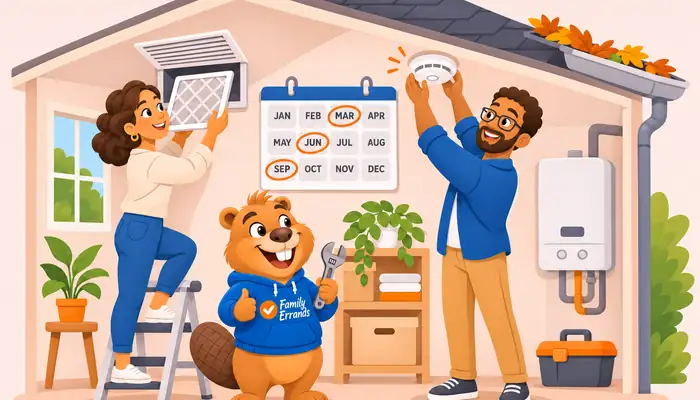
What spring cleaning includes
Spring cleaning sits between your weekly chores and a full deep clean. It usually covers four things:
- Decluttering: going through cupboards, wardrobes and drawers and deciding what stays.
- The seasonal swap: putting away heavy coats, duvets and heaters, and bringing out lighter things.
- Outdoor and “once a year” jobs: windows from outside, the balcony or garden, gutters, the shed.
- Fresh air and soft furnishings: rugs, curtains, cushions and bedding aired or washed.
If you want to go room by room into the oven, the grout and behind the fridge, that's a separate job with its own order of work; see our deep cleaning checklist. Everyday and weekly jobs are in the household chores list.

Plan the weekend before you start
A spring clean shared between two or more people goes more smoothly with a little planning:
- Pick the weekend together and put it in the calendar early, so nobody books something else.
- Split the list by area. One of you takes the wardrobes, another the balcony; swap if someone would rather do something else.
- Set out boxes first: keep, donate, recycle, rubbish. Deciding where things go is quicker when the box is already there.
- Book what needs booking: a charity collection, a trip to the recycling centre, a slot for bulky waste if your area offers one.
- Leave room for a break. Not everything has to be finished on the same day.
Declutter: what to throw away
Go through each area with one question: will we use this in the coming year? Things that commonly go:
- Expired food in the pantry, spices and the freezer
- Out-of-date cosmetics, sunscreen and toiletries
- Old or expired medicines (ask your local pharmacy how to dispose of them rather than putting them in the bin)
- Clothes and shoes that no longer fit or haven't been worn for a year
- Odd socks, broken hangers, food containers without lids
- Worn sponges, cleaning cloths and old towels
- Dried-out pens, old paperwork you don't need to keep, manuals for things you no longer own
- Cables, chargers and gadgets nobody uses
- Toys and books the children have outgrown
- Bags of bags, empty boxes “kept just in case”
Things in good condition can go to the donate box: charity shops, a local library for books, neighbours or friends. For papers that may matter (contracts, tax or medical letters), check before you throw them away.
The seasonal swap
- Wash and store winter coats, hats, scarves and gloves
- Wash heavy duvets and blankets before putting them away; bring out lighter bedding
- Clean and store heaters; check fans and air conditioning, and clean or replace their filters
- Swap winter boots for summer shoes by the front door
- Move summer clothes to the front of the wardrobe
- Check sun hats, sunscreen and outdoor gear for what needs replacing
Outdoor and once-a-year jobs
- Wash windows and frames from the outside
- Sweep and wash the balcony, terrace or patio; wipe outdoor furniture
- Clear gutters and drains where you can reach them safely
- Tidy the shed, garage or storage room
- Check garden tools, the hose and the barbecue
- Wash bins and their area
- Shake out and air rugs and doormats; wash or air curtains and cushions
- Test smoke and carbon monoxide alarms and change batteries if needed
Keep the list in Family Errands
A shared list lets everyone see what's left over the weekend without asking each other in the family chat.
Write the checklist once as a note
Create a note with a checklist, one line per job. If the list already sits in a chat or another notes app, copy it: in Notes the app offers to make a new note from the copied text, and each line becomes a separate checklist item.
Create an errand from the note on the weekend
A new errand appears for today with the note's checklist, and the note stays as it is for next spring.
Share it with the people you live with
Tap their avatars; everyone sees the same list on their own phone, and changes show up automatically.
Tick items off separately
One person ticks off the wardrobes while another finishes the balcony, and everyone sees what's still open.
Pass on a whole area
If “Balcony and windows” is its own errand and plans change, the person it belongs to can transfer it: it becomes the other person's and leaves their list.
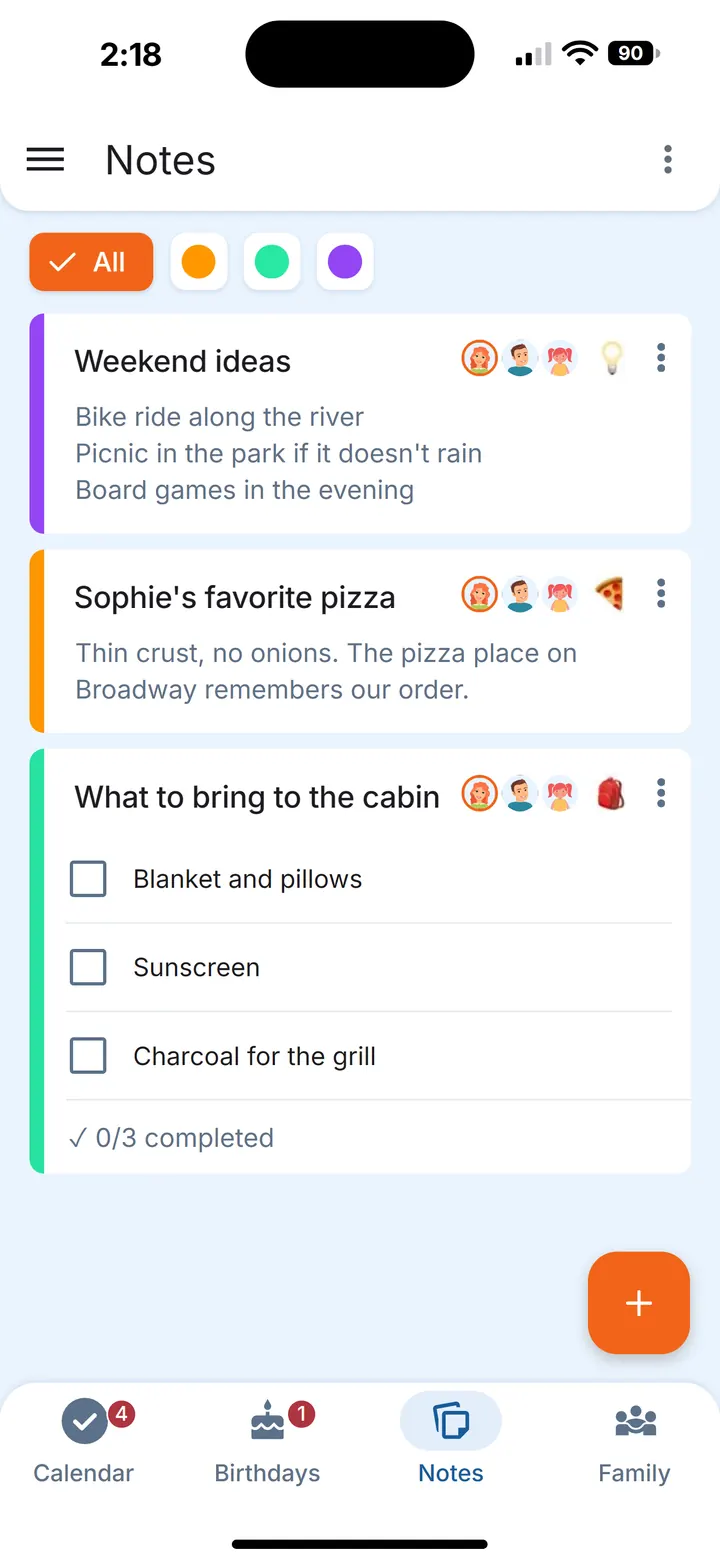
Big areas can be separate errands, for example “Declutter wardrobes” and “Balcony and windows”, which makes it easier to spread them over two weekends. Things that came up but don't need a date, like “take the donate box to the charity shop”, can be errands without a date: they're shown every day until you complete them.
Make it a yearly errand
Spring cleaning comes round once a year, so set the errand to repeat yearly. For yearly errands you can shift them off inconvenient days: if the date falls on a day you've excluded, the errand moves to the nearest earlier or later day that suits you. Smaller seasonal jobs with their own rhythm, like replacing the air conditioning filter, work well as separate repeating errands, and stock tracking can remind you when only a few filters are left.
Questions
What does spring cleaning include?
Decluttering, swapping winter things for summer ones, outdoor and once-a-year jobs, and airing or washing rugs, curtains and bedding. A room-by-room deep clean is often done separately.
What should you throw away when spring cleaning?
Expired food, cosmetics and medicines, clothes that no longer fit, odd socks and lidless containers, worn sponges and cloths, and gadgets nobody uses. Things in good condition can be donated.
Where do you start with spring cleaning?
Many people start by decluttering, because fewer things means less to clean and store. Setting out keep, donate, recycle and rubbish boxes first helps.
How do you share spring cleaning with your family?
Agree on a weekend, split the list by area and keep it as one shared checklist, so everyone sees what's done and what's left.
Does Family Errands work on iPhone?
Yes. Family Errands is on the App Store and Google Play, and one family can use both: a partner on iPhone and a partner on Android share the same errands.